Shri Premjibhai has developed an innovative
practice for planting / growing trees in the arid region. The named the
technique as Sand Pipe method.
Description
:
The steps of the methods are as below. (To see the planting method stepwise in detail, please Click Here)
Step: 1) A pit is dug ( about 1 feet deep) and a sapling is placed vertically in the pit.
Step: 2) A PVC pipe of approximate 6 inch in diameter and 2
feet in length is inserted (about 1 feet deep) placed vertically aside
of the plant in the pit.
Step: 3) The pit is filled with the normal soil up to the ground level.
Step: 4) Now the PVC pipe is filled with the coarse sand up a ground level
Step: 5) Pull out the PVC pipe slowly. The process makes a
passage in the ground nearer to the root portion of plant and
facilitates easy and maximum movement of water towards roots.
Steps: 6) Watering one – two bucket of water (15 – 25 liters)
on the top of the sand passage. This water does not spread in
surrounding area but remain in the dry coarse sand and give moisturize
effect to the root zone of the plant. This accelerate the root
germination and helps the plants growth much faster.
Steps: 7) In case of insufficient monsoon, additional
water and if available , watering the plant one or two times in six
months ( during summer and winter ) . This water is sufficient for the
tree to survive till next monsoon (for one year)
The concept behind this is that the sand filled pit acts as a chamber
and moisture is retained for a longer time. Water percolating through
sand facilitating water absorption by root zone of the plant and it
helps the roots development much faster and ultimately plant survive for
longer period.
Mohammed Bah Abba's pot-in-pot coolers help rural Africans preserve perishables.
hat’s the case in many parts of rural Africa, where the lack of access to or high cost of electricity prevents many people from basics most of us take for granted, like refrigerators.
Nigerian Mohammed Bah Abba’s innovative food-cooling system adapted old-world technology into inexpensive, portable refrigerators that are particularly effective in desert climates, where fruits, vegetables, and other perishables can quickly spoil.
VIEW IMAGES
Abba's low-tech refrigeration system keeps perishable foods cool by placing wet sand between two pots.
PHOTOGRAPH BY TOMAS BERTELSEN, ROLEX AWARDS
Abba, a college lecturer who came from a family of clay-pot makers, saw an opportunity to raise living standards for rural Nigerians. In the late 1990s, he developed a pot-in-pot system that could extend the shelf life of perishables from days to weeks.
His concept costs about two to four dollars and is decidedly low tech. It consists of two earthenware pots, one smaller than the other. The outer pot is filled with wet sand, while the inner pot, used to store foods, is covered with a wet cloth.
As the water in the sand in the outer pot evaporates, the inner pot is cooled to as low as 40ºF, preventing bacteria from flourishing and keeping foods, or even vaccines that require refrigeration, safe.
The pot-in-pot system enables farmers to sell produce for longer periods of time and at higher prices, and they’ve cut the daily market trips many families make to purchase fresh food.
How long is the shelf life for your fruits since you guys don’t have electricity or somewhere permanent to keep them?”
John Mbindyo was buying groceries at his local store in Nairobi, when the 28-year-old IT graduate asked that question of his vendor. The store manager said, depending on the amount of stock, the goods last about two to three days. And then, he added: “I wish we had fridges to keep them cool.”
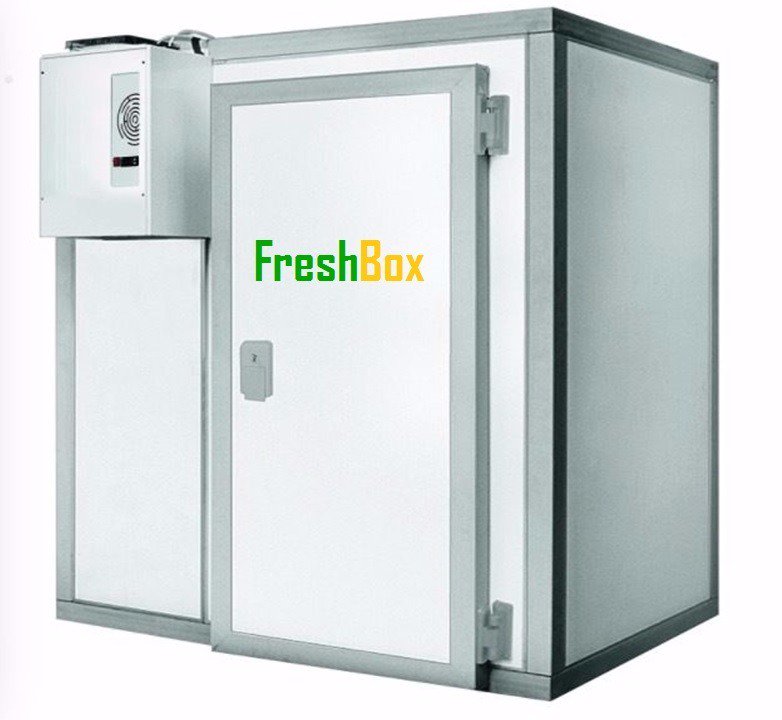
And so was born the idea for FreshBox, a solar-powered, walk-in cold room that provides retailers with storage facilities to preserve perishable products. Operating for five months, the project offers vendors and farmers refrigeration services for 70 Kenyan shillings ($0.68) a crate per day. “It hit me,” Mbindyo says. “There’s demand. This is possible. Why not try it out?”
Throughout the world, food waste and spoilage is a significant problem facing supply chains from farm to fork. The Rockefeller Foundation says one-third of all the food that is produced is never consumed—a staggering loss that would have fed the nearly 800 million people who are food insecure of undernourished worldwide.
The crisis is even more acute across Africa, a continent where the majority of people derive their livelihood from agriculture. Currently, more than 20 million people in northeast Nigeria, South Sudan, and Somalia are facing starvation. Yet, half of all the staple food in the continent is lost in the post-harvest stage or before they hit the market.
In Tanzania, for instance, nearly 40% of all grains are lost due to poor storage, costing the East Africa nation $332 million in revenues every year. In South Africa, despite increased production of food, 13 million people go to bed hungry partly because of inadequate storage facilities.
“Like manufacturing, agriculture needs to be supported by complete functioning systems from production to consumers,” says Calestous Juma, a Harvard professor and author of the book, The New Harvest, about agricultural innovation in Africa. “The solutions lie in building reliable energy, storage, processing, and transportation systems to support agriculture.”
But while there’s need to massively invest and improve the entire food system in Africa, there are small and large-scale technology projects hoping to stop the drain of food waste. The innovations around renewable or alternative energy are also paramount given that access and connection to electricity, especially in rural areas where food is produced, is still a luxury in many African countries.
Last year, the Rockefeller Foundation kick-started the YieldWise program, a seven-year multi-million dollar initiative to strengthen food systems. The foundation will work with governments and companies like Dangote Farms to provide metal silos and hermetically-sealed bags to smallholder farms. In Kenya, the project will promote solar drying and provide cold storage units to preserve crops.
The shift towards preservation is also taking place in rural and desert communities. Back in 2001, Nigerian Mohammed Bah Abba invented a pot-on-pot system that preserved produce for weeks instead of days. The two earthenware pots were fitted into each other, filled with wet sand, and the produce covered with a wet cloth. Bah Abba went on to sell as many as 12,000 pots
Go Energyless, a Morocco-based social enterprise also developed a natural low-cost cooler that can save food for over 13 days for people in remote areas. Its prototype is made with clay by local potters.
Evaptainers, a project that started in an MIT classroom, has also developed a mobile, electricity-free cooling unit that allows fruits, vegetables, and meat to be stored in one place.
Many of the innovative cooling units available, which could potentially save billions of dollars of food from waste, are also a reminder of the need to scale innovations with backing from investors in order to have a real impact on Africa’s agriculture ecosystem.
Since its establishment, FreshBox has engaged the services of 10 different vendors in Nairobi, and four different farmers in the neighboring Kiambu County. Mbindyo has also reached out to hundreds of farmers and retailers who say they are willing to purchase his services. “I am hoping to expand our capacity, and to have a number of units across Nairobi to attract more clients,” he said.
These kinds of tech investments, Juma says, is the best way to show communities that not all is lost on agriculture. “The work must start with securing the system in the first place,” he says. “One episode of rotting produce is enough to put off a community from increasing yields for a lifetime.”
Our global food system is facing a quiet crisis—one-third of all food produced is never consumed while 1.2 billion people go to bed hungry or under-nourished, and global economic losses mount into the trillions.
We will let this crisis build quietly no more.
At the World Economic Forum in Davos, Switzerland, I joined with our President Rodin to formally launch YieldWise, a $130 million initiative to demonstrate how the world can cut food waste and loss by half by 2030. This is the next chapter of The Rockefeller Foundation’s agriculture and food security work, which has spanned more than a century and several continents—from seeding the Green Revolution that fed a billion people across Asia and South America in the 1950s and 60s, to the work of the Alliance for a Green Revolution for Africa (AGRA) (in partnership with the Bill & Melinda Gates Foundation), over the last decade.
“In Africa, 50 percent of fruits and vegetables, 40 percent of roots and tubers, and 20 percent of cereals—all of which are staple foods—are lost in the post-harvest stage or processes.”
While food waste and loss is a global problem, we will be focusing on sub-Saharan Africa, where 70 percent of the people rely on agriculture for their livelihoods and many of whom are also part of the world’s 1.3 billion who are food insecure. Here, 50 percent of fruits and vegetables, 40 percent of roots and tubers, and 20 percent of cereals—all of which are staple foods—are lost in the post-harvest stage or processes. As such, these vulnerable people are twice-hit.
For instance, take Sella, a potato farmer in Central Kenya. She refused to take a price for her potatoes that was so low that she wouldn’t break even on her investment in farming them—but because she lacked important market information, she failed to garner a better price. In the end, the potatoes simply spoiled—at great cost to Sella, and to the people who could have eaten the potatoes.
Sella’s lack of information, market opportunities, technologies, and access to alternative markets are, unfortunately, a familiar story for millions of farmers.
Over the last three years, we have explored interventions as part of our ongoing work to strengthen African farmers like Sella. We learned that there are many existing solutions—yet these solutions were not reaching smallholder farmers. We are dedicated to re-aligning actors and interventions, such as expanding proven technologies that preserve crops in harvest, packaging, and distribution, empowering them to protect themselves against crop loss and defending their livelihoods for years to come. This technological innovation and training will begin at mango farms in Kenya, maize farms in Tanzania, and cassava and tomato farms in Nigeria—nations that rely on agriculture to fuel growth, but where 40 percent are now lost between harvest and the market. These crop-saving techniques can also increase farmer incomes by 15 percent, giving them the chance to contribute to their local economies through increased consumer spending. Greater efficiency at the farm level will also increase the availability of nutritious food in local markets for families who don’t now have access to them.
But our work through YieldWise will go far beyond direct help to farmers. We also will drive collaboration across sectors and encourage investment from all actors throughout the food system, including partnerships with some of the world’s most recognized brands. New purchase agreements with large food buyers such as Coca-Cola—a collaborator of The Rockefeller Foundation—are allowing farmers to quickly sell their crops to a guaranteed buyer without the burden of frequent travel to oversaturated, and sometimes distant, local markets. Dangote Group—another Rockefeller Foundation collaborator—is working with the government of Nigeria to build a tomato processing industry to use tomatoes that would otherwise rot without access to cold storage. Further, Rockefeller Foundation grantee Pyxera is helping farmers identify and grow diverse tomato varieties that are in demand by both consumers and processors. In tandem, these two programs will diversify farmers’ buyer bases, allowing them to sell more, reduce loss, and increase profits.
Our work in Africa will directly impact the continent, encouraging the growth of local agriculture economies, protecting smallholder farmers and decreasing food insecurity. But the effects of that work will be felt far beyond Africa, as we make targeted investments in industrialized countries to reduce food loss that happens at the retail level, and demonstrate that is possible to reduce food waste and loss all over the world.
Tell us your strategies for cutting food waste and loss for the benefit of people, planet, and profit using the hashtag #YieldWise.
The term food waste usually conjures up uneasy images of the household rubbish bin and what goes in it – unopened bags of salad, chicken past its sell-by date, loaves of hard bread, all thrown away with guilt-ridden regularity. It’s less likely that people will envision mountainous tonnes of perfectly good french beans going to waste in Kenya, a shockingly normalised occurrence. Perhaps this is because the discourse around food waste has so often focused on the individual, taking the form of a powerful guilt trip tallying up our household waste; we throw out22% of what we buy, which currently adds up to4.2 million tonnes of food chucked away in Britain each year. Yet anew report on food waste in Kenyaby anti-food waste organisationFeedbackshines a light on the little studied and often overlooked wastage taking place at the other end of the supply chain, at the point of production.
Feedback reveals that on average a staggering 44.5% of food grown within Kenya’s horticultural export industry is rejected before it has left the country, sometimes before it has even left the field. There is little to no local demand for the french beans, mange tout and baby corn grown for export, and with no alternative market the rejected food is at best used for compost or fed to cattle, at worst simply dumped. The report tells a story of absurd levels of overproduction, waste and suffering in Kenya, and traces it unequivocally to two problems at the top of the supply chain: last-minute order cancellations or alterations, and cosmetic specifications – industry-speak for supermarkets’ virtual embargo on food that is not perfectly identical in colour, shape and size.
Last-minute order cancellations and alterations come under the umbrella term of unfair trading practices within Feedback’s report, a mild way to describe the climate of ruthless volatility within which Kenyan producers and exporters attempt to stay afloat. Farmers work to growing programmes passed down from importers and retailers, and the wastage is generated when orders are slashed or entirely cancelled at the last minute, often during or even after the harvest. Such cancellations were reported as occurring up to two or three timesa monthin some instances. Often the exporters take the hit, but sometimes it gets pushed further down to farmers who can incur losses of up to 100%. In either case, thousands of kilos of perfectly edible food are wasted.
The source of this fluctuation is not so much dramatic spikes and slumps in the western consumer’s appetite for french beans; rather it’s the ruthless juggling act the supermarkets perennially perform to secure the best deal for themselves. Edd Colbert, co-author of Feedback’s report explains: “Supermarkets know that fresh produce has a limited shelf life, it’s highly perishable and as such it loses its value very quickly, so using these trade practices allows them to retain power and to transfer financial risk down the supply chain.” Particularly in peak season, when Kenya’s main exports are abundantly available from other nations, such as Britain, Egypt, Guatemala or Morocco, supermarket buyers will chop and change orders to serve their interests.
Cosmetic specifications are the other major cause of wastage. Unnecessarily stringent aesthetic standards disqualify produce from Kenya that is too long, too short, too thick, wind damaged, pest damaged or suffers other myriad ‘imperfections’. Accounts of such practices might be depressingly familiar (particularly for the British, whose major retailers were named the strictest arbitrators of horticultural aesthetics in Europe by Kenyan participants in the Feedback study). The report focuses in forcefully on the practice of ‘topping and tailing’ french beans, the details of which might shock even the most jaded critic of supermarket buying habits. The average wastage level caused by topping and tailing stands between 30% and 40% – all so that the beans fit uniformly in retailer packaging. The example illustrates how a cycle of wasteful practices becomes entrenched, with farmers planting longer varieties of beans that lend themselves better to the rigours of being chopped. The end result is that mountains of ever-longer bean tops and tails are wasted instead of eaten.
Behind such cosmetic practices lurks the notion of the fussy consumer, who abhors anything less than reliable uniformity and will march off in protest to competitor retailers in search of identical baby corn. However, Feedback’s report suggests this is not entirely the case: Kenyan farmers insist that cosmetic specifications are routinely deployed as a front to mask what are really order cancellations. “When there’s a drop in supply, cosmetic specifications are relaxed and produce with blemishes or varying size can be sold – there isn’t any significant effect on sales. We know that consumers will buy this produce,” says Colbert. “Supermarkets use cosmetic specifications as a control technique, relaxing or enforcing these requirements when there’s oversupply or undersupply of the product”.
The report not only casts light on these dishonest trading practices and the waste they generate, but also on the overproduction — the excessive use of land, water, agro-chemicals, seeds, labour — implicit in this senseless system. Through a true cost accounting lens, if all the externalities (including the resources ploughed into those beans that didn’t make it to market as well as those that did) were to be included in the final cost, the price of french beans on our supermarket shelves would rocket. The true cost of Kenyan horticulture for export may be almost impossible to quantify with farmers and exporters discouraged from measuring the waste and “suffering in silence” for fear of losing business, according to one agricultural expert quoted in the report. Yet we clearly see the human toll here. Farmers emerge as the most vulnerable actors within the system, absorbing the brunt of the financial risk and often falling into cycles of debt, sometimes struggling to provide even the barest necessities for their families.
What can be done? The report stresses that unlike other costly attempts to reduce post-harvest losses in the global South (which result most often from poor infrastructure or inadequate storage), the type of food wastage taking place in Kenya can be addressed through simple changes in business and trading practice. For example, after coming under pressure from Feedback, Tesco has switched to just topping their beans, which has resulted in a third less waste at one Kenyan exporter. Likewise a shift to direct supplier relationships would demand that order cancellations be compensated under the Groceries Supply Code of Practice. Indirect suppliers are not protected under this legislation, affording the supermarkets generous wriggle room for chopping and changing orders. The Kenyan case study is a typical example of wastage caused across the global horticulture food chain – similar research is taking place in Britain, Costa Rica, Guatemala and Peru. But the kind of changes recommended by Feedback at the retail end of the supply chain – where the real power lies – could reign in this waste and overproduction, and reduce the environmental and human consequences.
There’s a bagel place two blocks north of my apartment. During the
day, it serves hundreds of people. One of its points of pride is that
its bagels are made fresh, daily. From what I understand, that’s kind of
the thing with bagels: They have to be made fresh daily.
If I’m walking home late at night, after the grates are pulled over
the storefront, I’ll kick the trash bags out front of this shop. Pretty
much every time, I’ll find one that feels soft and bready beneath my
toe.
This is the free bagel bag. As far as I know, it is my secret.
Though I’m happy for the free bagel or seven, most of these bagels
will still be carted off to the dump in the morning. And across New York
City, there are likely many free bagel bags going undiscovered.
We throw out 40 percent of our food while others go hungry
LeManuel Farrish helps his cousin, Makayla Farrish, age 3, finish her
dinner at Cathedral Kitchen on August 21, 2013, in Camden, New Jersey.
Cathedral Kitchen is a multi-service soup kitchen that has been serving
the Camden homeless community since 1976.
Our country throws away 40 percent of its food, routing $165 billion
of food to landfills each year. An individual American throws away an
average of 20 pounds of food a month, according to a 2012 report by the Natural Resources Defense Council.
At the same time, in 2013, 49.1 million
people lived in food-insecure households, according to USDA figures. At
some point during 2014, one out of four Americans relied on some sort
of federal government food assistance program. The number of Americans
turning to these programs has increased since the 2008 financial crisis,
yet since the start of the recession, funds for these programs have
repeatedly been cut, and congressional Republicans are pushing for further cuts this year.
All of that wasted food, meanwhile, creates a host of environmental
problems, growing the size of landfills and contributing to climate
change. Organic matter decomposing in dumps is the third largest source of methane emissions, a potent greenhouse gas, in the US.
Not all of the food we send to landfills is fit to be eaten — but a
lot of it is. Grocery stores overstock to make their shelves look
bountifully full. Industrial kitchens, like those found in universities
and hospitals, cook too much to make sure they will have enough food for
an unexpectedly large influx of diners. Much of this food would still
make a fine dinner up until the moment it gets bagged and tossed in the
dumpster.
Businesses worry about liability, but are protected by the law
Shutterstock
So why are we so bad at getting this food to people who want to eat it?
There are a number of answers to that question, says Steve Dietz —
none of which amount to terribly good excuses for our wasteful nation.
It’s Dietz’s job to convince kitchens of various sorts — those at
universities, hospitals, restaurants, airports — that it’s in their best
interest to donate food. He heads up business development for the Food
Donation Connection, a group that connects 8,000 locations in the US,
Canada, UK, and Ireland to around 9,000 nonprofit agencies that get food
to people in need.
"So I’ll go up to a CEO and say, ‘We want you to save your surplus
food and donate it, and we’ll come up with the process on how to do it,
we’ll manage that process for you,’" Dietz explains. "‘We’ll find the
agencies, link them, and basically we’ll run the program for you.’" By
end of this year, the Food Donation Connection expects it will have
rescued 500 million pounds of food.
Dietz says the most common reason kitchens don’t donate is because management is afraid of the risk involved. On one recent survey
by the Food Waste Reduction Alliance, 67 percent of wholesalers and
retailers in the United States listed liability — say, if someone gets
sick from spoiled food, and decides to sue — as their biggest concern
about donating.
But that 67 percent of people need not worry. In 1996, Bill Clinton
signed the Bill Emerson Good Samaritan Food Donation Act, which protects
food sellers and kitchens from any liability should they choose to
donate excess food.
Donors are safe "unless there’s gross negligence, and gross
negligence has been described to me by several people as someone has to
willfully taint the food knowing it’s going to harm someone," says
Dietz. "To date, to anyone’s knowledge, no one has ever challenged that
in court. Nobody has ever sued anybody under that act."
But potential donors still worry. "Just because I can’t win a lawsuit
under the Good Samaritan Act doesn’t mean I can’t drag you through the
mud and cost you a fortune," Dietz explains.
Businesses also have logistical concerns and can get scared by misinformed health departments
Though liability is the big one, there are other concerns that also
sometimes prevent people from donating. Some restaurants, for example,
aren’t sure what to do with the food while waiting for the groups that
give it to needy people to come pick it up. "We hear about the cost of,
you know, ‘What are we going to put it into?’ and ‘Where are we going to
leave it?’ — reserving space in the cooler for it," says Emily Broad
Leib, an assistant professor of law at Harvard who directs the
university’s Food Law and Policy Clinic. "And then, if the food recovery
organization isn’t the one picking it up, ‘How are we going to get it
to the place where it needs to go?’"
While working with organizations seeking to donate food in
Massachusetts, Broad Leib has also found that kitchens can face pushback
from health inspectors when they consider setting up a donation
program. "I think sometimes health departments get really nervous — they
don’t know what the rules are, and they really scare companies," she
says. "When a company asks their health inspector, ‘Well, how can I do
this?’ they get guidance back that is really onerous."
Perhaps surprisingly, most people I spoke to agreed that retraining
workers, or scheduling more workers, to get a food donation program up
and running was not a major impediment for potential donors. According
to Dietz, Darden Restaurants, one group the Food Donation Connection
works with, did a study that found that preparing food for donation took
workers about 15 minutes a day, and that that cost could be covered
completely by "reallocating labor," without the need to hire new
employees.
Many companies can receive tax credits for donating food
But while there are a host of concerns about donating food — the
biggest of which, liability, is something of a nothingburger — there’s
one big, good reason (at least, for some companies) to donate food: Many
corporations are eligible for a tax credit if they donate food that
would otherwise be wasted.
The challenge for Dietz’s Food Donation Connection and other groups
that want to facilitate food donation is to overcome the burden of
concerns about liability and spread the good news about the tax credit.
"So I go to a CEO and I say, ‘We can save you $5 million next year on
your income tax,’ we take a small percentage of that to fund us, and
the agencies get all the food for free," Dietz says. (The Food Donation
Connection is for-profit and makes its money from the corporations that
it helps set up donation programs. It’s a model Dietz says better allows
the organization to provide food, at no cost, to groups like soup
kitchens, and to not compete with them for funding.)
Dietz ran through a hypothetical scenario of how the tax incentive
could help a company that regularly throws out its food. Think about a
bowl of spaghetti. It costs $10 on the menu. If it costs the restaurant
$3 to make the dish and then you take taxes into account, the restaurant
might make about $4 in profit on that spaghetti — if you order it.
If you don’t, and the restaurant throws out its $3 of ingredients, it
loses $2.05 — it’s not a complete $3 loss because the restaurant gets a
small tax benefit just for buying the food in the first place.
But if the restaurant donates those same ingredients — and receives
the tax benefit for doing so — it may end up losing only about 85 cents.
The problem is, not every business is certain to get the tax break.
For C corporations — a tax designation that includes many, but not all, American companies that deal with food — the tax break
has been in place since 1976. But for years it didn’t apply to other
types of corporations, including many small businesses and farmers. The
tax credit was temporarily expanded in 2005, but that expansion has
been renewed only sporadically — often, like so many other tax credits,
amid a frantic rush of tax extenders at the end of the year. Because of
this uncertainty surrounding the tax credit, many people with food to
give have remained reluctant to donate — fears about liability trump the
potential benefit of an unreliable tax credit.
"People would rather do nothing than take the tiniest bit of risk,"
says Broad Leib. "We don’t have great data on how much the tax incentive
changes people’s minds, but we do have one data point: that in 2005,
when we expanded that tax incentive to go to all businesses instead of
just C corporations, donations rose by 137 percent the following year."
In the face of federal inaction, some states have set up their own
tax incentives for certain groups excluded from the federal tax credit.
But other states are taking a different tack: Instead of providing a tax
incentive to donate food that might otherwise be wasted, they’re simply
banning organic waste from landfills. It’s a method that could cut down
on needless food waste even more than tax incentives. (I’ll take a
closer look at these food waste bans in my next post.)
New York, in fact, is rolling out such a law. But it’s still getting up and running.
So in the meantime, if you’re interested in acquiring some day-old bagels in bulk, let me know. I can hook you up.
Environmental impacts of food waste aren't a great concern, a new survey shows
Americans toss $640 worth of food each year, according to a surveyreleased Wednesday.
Though more than half of Americans say they reuse leftovers for new meals, 76% of the 1,000 adults surveyed say they throw away leftovers at least once a month; 53% say they do so once a week, the American Chemistry Council found.
All that wasted food makes Americans unhappy, but for different reasons. An overwhelming majority (79%) say they’re bothered by the wasted money spent on thrown-out food, 45% say they’re bothered because other people in the world are hungry and 15% say they’re concerned about the environment. The EPA says food waste makes up 20% of landfill content and releases the greenhouse gas methane as it rots.
“For years we’ve been told to finish your plate, there are hungry people,” Steve Russell, vice president of plastics at ACC, told USA Today. “I just don’t think we’ve done a good enough job yet talking about the environmental impacts of food waste.”